
BANGKOK – Government officials and business leaders from Kazakhstan and Thailand met in Bangkok on May 25 to explore new opportunities in trade, investment and tourism cooperation, as both countries seek to strengthen economic ties and diversify commercial partnerships.
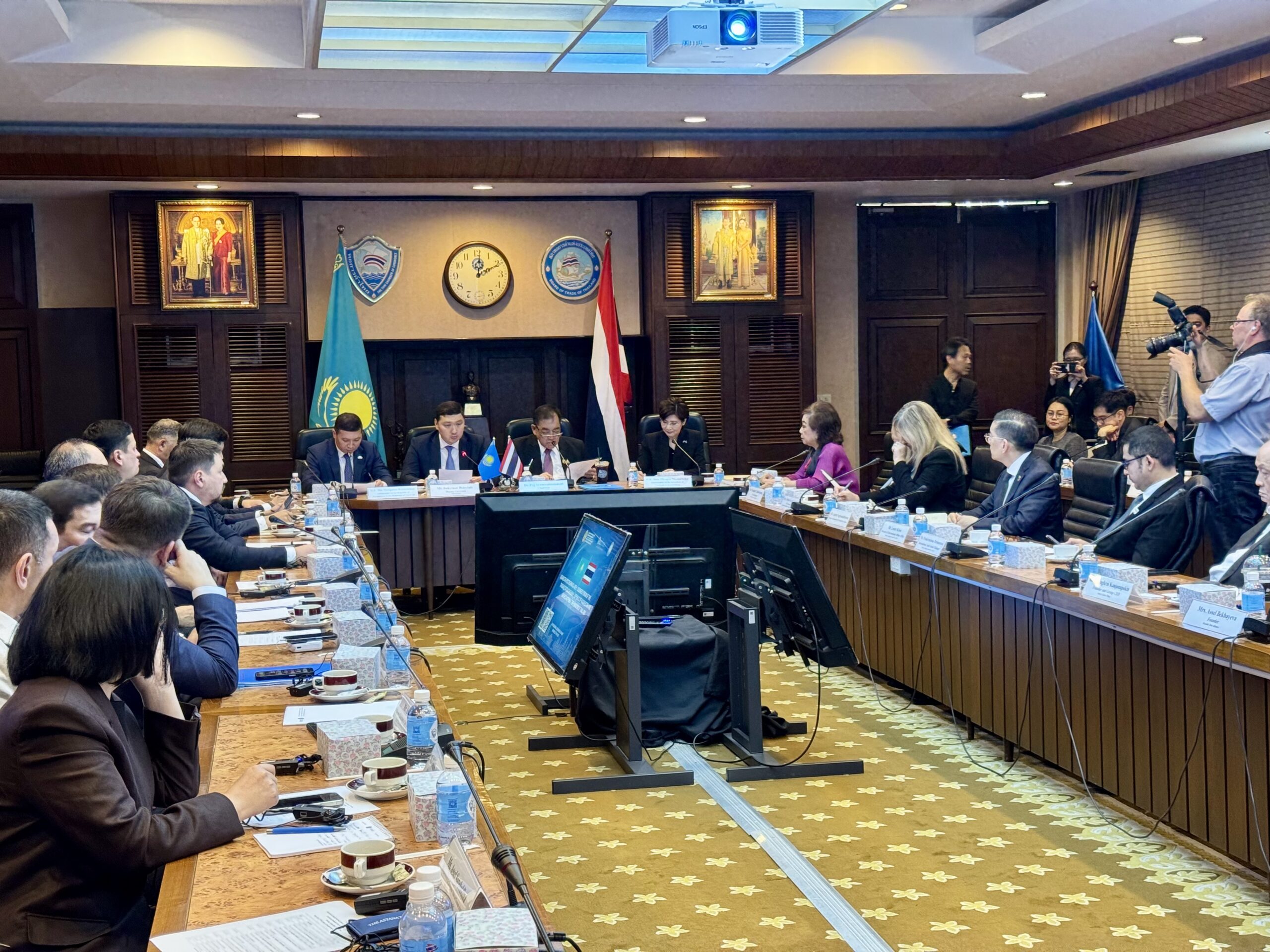
Kazakhstan-Thailand business forum. Photo credit: Assel Satubaldina/ The Astana Times
The forum brought together representatives from government agencies, chambers of commerce and private companies to discuss cooperation in sectors ranging from agriculture and food processing to logistics, digital technologies, energy and tourism. Participants highlighted Kazakhstan’s role as a gateway to Central Asia and Thailand’s position as one of Southeast Asia’s leading manufacturing and export hubs.
Trade between Kazakhstan and Thailand reached $255.1 million in 2025, with $216.5 million of those being Kazakh imports. In 2024, the figure stood at $236.5 million, according to figures from Kazakhstan’s Bureau of National Statistics.
“Thailand and Kazakhstan have continued to expand economic engagement in recent years with the growing opportunity for collaboration in areas such as agriculture, food processing, technology, logistics, and investment. As a key economic hub in Central Asia, Kazakhstan offers a very strong potential for trade, investment, and business partnership with Thai companies,” said Poj Aramwattananont, chairman of the Thai Chamber of Commerce and Board of Trade.
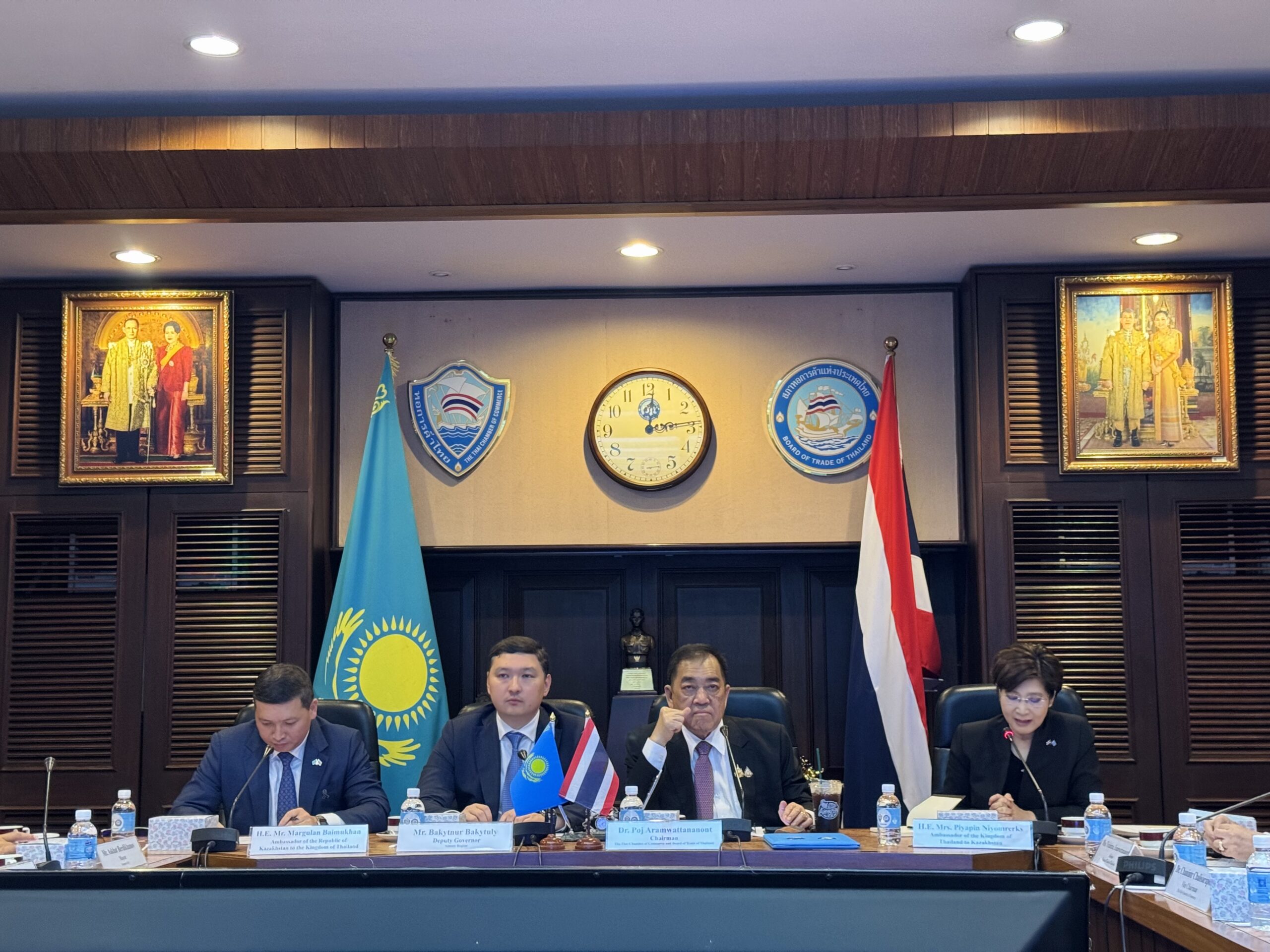
From L to R: Margulan Baimukhan, Bakytnur Bakytuly, Poj Aramwattananont, Piyapin Niyomerks. Photo credit: Assel Satubaldina/ The Astana Times
He said a Thai business delegation is scheduled to visit Kazakhstan in June led by Thailand’s Deputy Prime Minister and Foreign Minister Siasak Phuangketkeow. The mission will feature business seminars, meetings with trade and investment agencies, and networking and business-matching events aimed at strengthening commercial ties between the two countries.
Almaty Region Deputy Governor Bakytnur Bakytuly, who led the delegation, said Kazakhstan is seeking to expand exports to Thailand, particularly in metallurgy, petrochemicals, agricultural products and higher value-added manufactured goods.
“According to our estimates, Kazakhstan’s untapped export potential for the Thai market exceeds $900 million. In this regard, we consider it essential to continue promoting Kazakh products and strengthening direct ties between the businesses of our two countries,” he said.
Kazakhstan is also looking to attract Thai investment in sectors including food processing and manufacturing. Bakytuly cited Thai seafood producer Sea Value’s plans to launch a fish-processing and canned-food production project in Kazakhstan as an example of growing industrial cooperation.
Beyond trade, he said Kazakhstan sees opportunities for closer cooperation in transport and logistics through the Middle Corridor and Belt and Road connectivity routes, as well as in digital trade, fintech, cloud technologies, cybersecurity and artificial intelligence.
Piyapin Niyomerks, Ambassador of Thailand to Kazakhstan, welcomed the large Kazakh business delegation visiting Thailand.
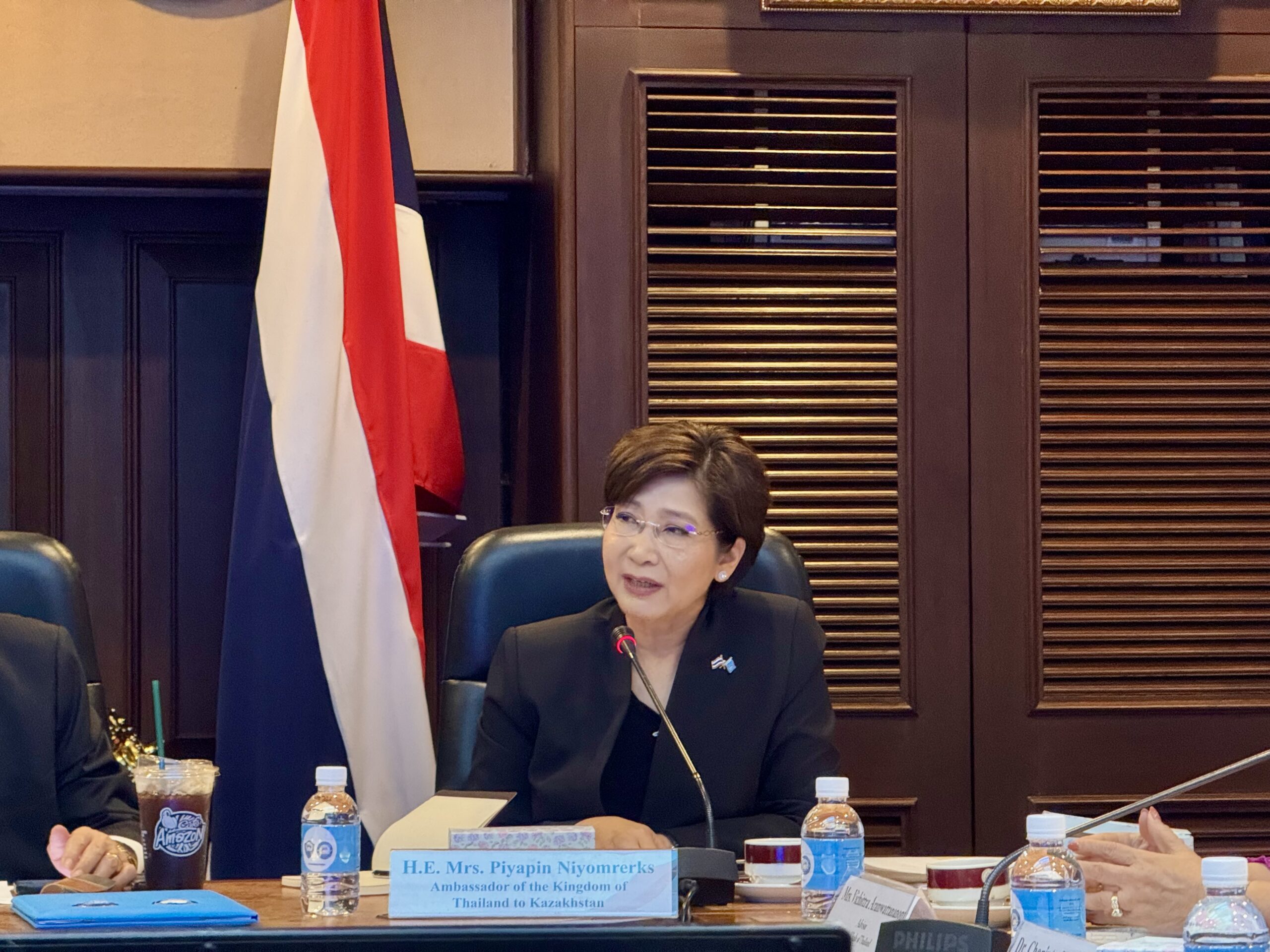
Piyapin Niyomerks, Ambassador of Thailand to Kazakhstan. Photo credit: Assel Satubaldina/The Astana Times
“The presence of this delegation, who are the key drivers for Kazakhstan’s international trade and investment, really means a lot to us, because it really shows the strong interest and enthusiasm and the readiness of the Kazakh side to engage with Thailand,” she told The Astana Times.
Niyomerks also pointed to Kazakhstan’s participation in THAIFEX-Anuga Asia, one of the world’s largest food and beverage trade exhibitions, as an opportunity to deepen commercial ties. She sees substantial potential in food and beverage cooperation, adding that energy, raw materials and critical minerals are other areas where the two countries could strengthen economic engagement.
Small and medium-sized enterprises (SMEs) will play a crucial role in driving bilateral cooperation, the ambassador said, noting that SMEs form the backbone of both economies.
“The role of SMEs is very important in the way that, for Kazakhstan, SMEs are the economic engine of the country. Same as Thailand, our economy also depends very much on SME development,” she said.
According to Kazakhstan’s Ambassador to Thailand Margulan Baimukhan, Kazakhstan accounts for more than 70% of Thailand’s trade with Central Asia. Although bilateral trade remains modest, the ambassador said both countries have the potential to increase annual trade turnover to $1 billion.
“Thailand is the gateway for ASEAN [the Association of Southeast Asian Nations], countries, which connects us through transport and logistic corridors, especially the Trans-Caspian International Transport Route or Middle Corridor. It is one of the very promising corridors, which can offer really efficient competitive logistics solutions, and creates new opportunities for Thai businesses,” said Baimukhan.
The ambassador also welcomed Kazakhstan’s representation in THAIFEX – Anuga Asia 2026 on May 26-30 in Bangkok, saying the exhibition provides an opportunity to promote Kazakh products in Thailand and the wider ASEAN market while encouraging two-way trade and investment.
Tourism has become one of the strongest drivers of bilateral relations, according to Baimukhan. The number of Kazakh visitors to Thailand has tripled in recent years, with around 200,000 tourists expected to visit the country this year after spending roughly $500 million in Thailand in 2025.
He also noted growing interest among Thai travelers in Kazakhstan. Supporting that trend, 23 weekly direct flights currently operate between Kazakhstan and Thailand, helping to facilitate business and tourism exchanges.
Niyomerks said Thailand hopes to expand cooperation with Kazakhstan beyond traditional tourism by attracting more visitors for healthcare and wellness services.
“We hope there is going to be repeated visitors to enjoy our world-class healthcare and wellness service in Thailand. It is not just tourism. You can go there for treatment and even for check-up, hospital visits. This is another area that we want to build on,” she said.
